Radio has stayed mostly the same for a hundred years. You turn it on, you pick a station, and you listen to whatever comes next. There is no memory of what you liked yesterday, no way to find something new based on your taste, and often you do not even know the name of the song that is playing.
AI can fix a lot of this without taking away what makes radio special: the surprise of live, curated sound.
The problem with radio today
Most radio apps are just long lists of stations sorted by country or genre. You scroll, you pick, you hope it is good. If a song catches your ear, you might never learn its name, since the metadata coming from the stream is often messy or missing. And once you close the app, it forgets everything about you. Tomorrow you start from zero again.
Where AI fits in
AI is good at three things that radio badly needs.
Cleaning up messy data. Live radio streams send metadata in inconsistent formats. Song titles get cut off, artist names are misspelled, and sometimes there is no useful text at all. AI can take this raw, messy input and turn it into something clean and readable.
Understanding patterns in what you listen to. Every time you tune in, you leave a small trail of data: which stations, which songs, which genres, how often. On its own this is just a log. With AI, it becomes a story. It can notice that you keep coming back to a certain sound and tell you about it in plain language, instead of just showing you a chart.
Making recommendations feel personal. Instead of a static genre list, AI can look at your actual listening habits and suggest a station or artist that fits what you already enjoy, the same way a good friend would recommend music, not a random algorithm shuffling categories.
A real example: the Dive Radio app
This is exactly the idea behind the Dive Radio project. It is a mobile app, built with Expo and React Native, that lets you browse and listen to internet radio stations from around the world using a simple globe view, by country, or by genre tags.
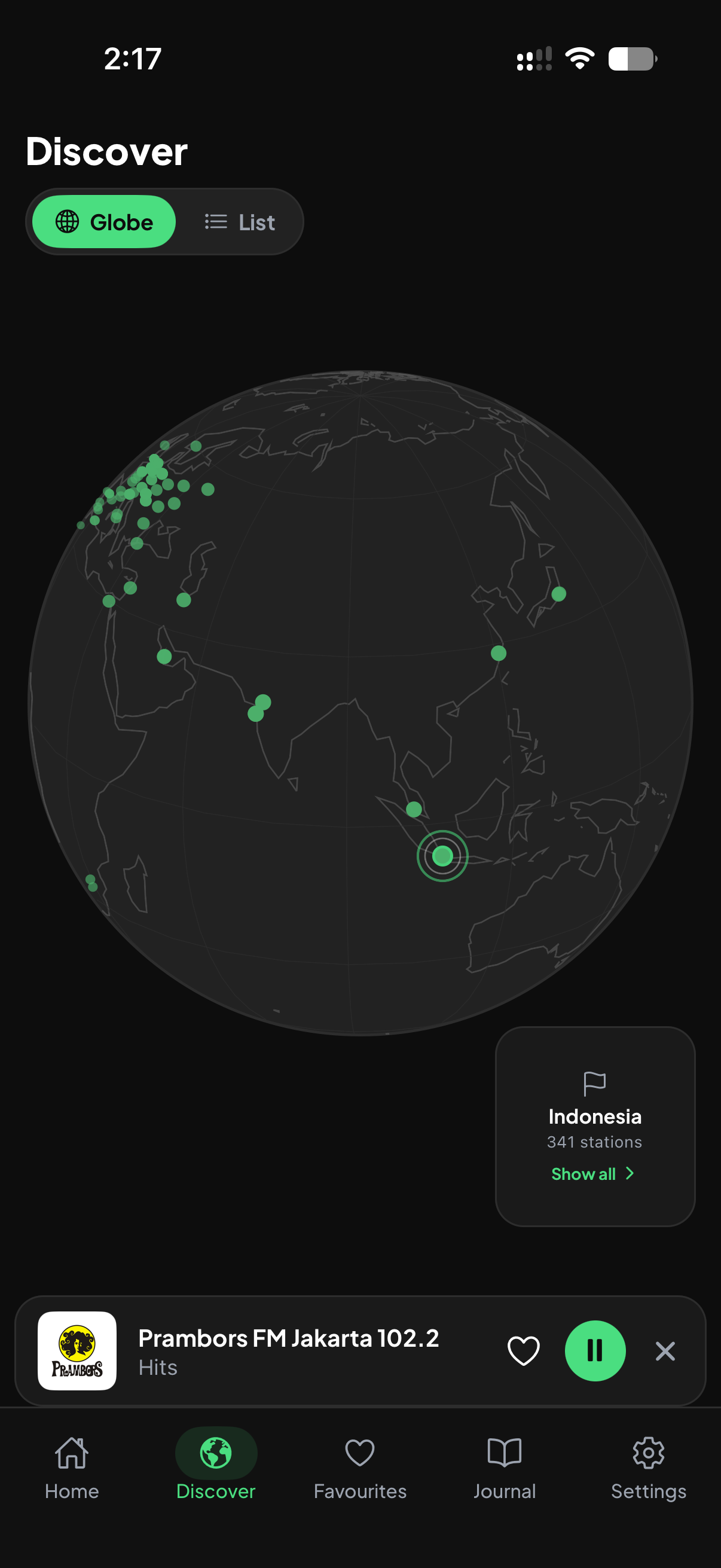
Under the hood, it solves the two big problems above.
First, it cleans up the raw station metadata as it comes in, so instead of garbled text you get a readable, accurate "now playing" display.
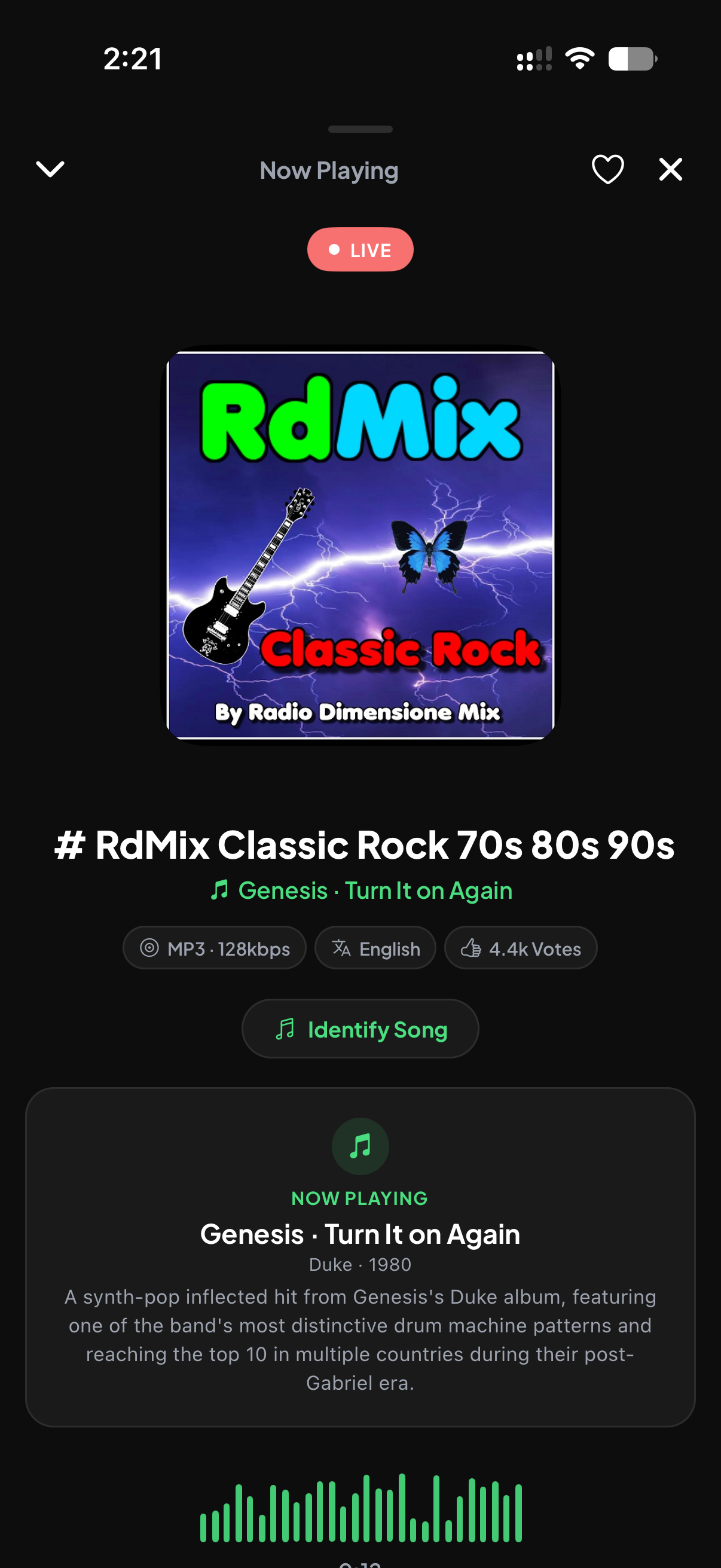
Second, it keeps a local record of what you listen to (stations, songs, genres, how often) and uses AI to turn that record into a short, personal "journal." Instead of a plain list of history, you get a few written lines that describe your listening in a human way, almost like a diary entry about your own taste. If AI is not available at the moment, the app falls back to a simple rule based summary, so it always works.
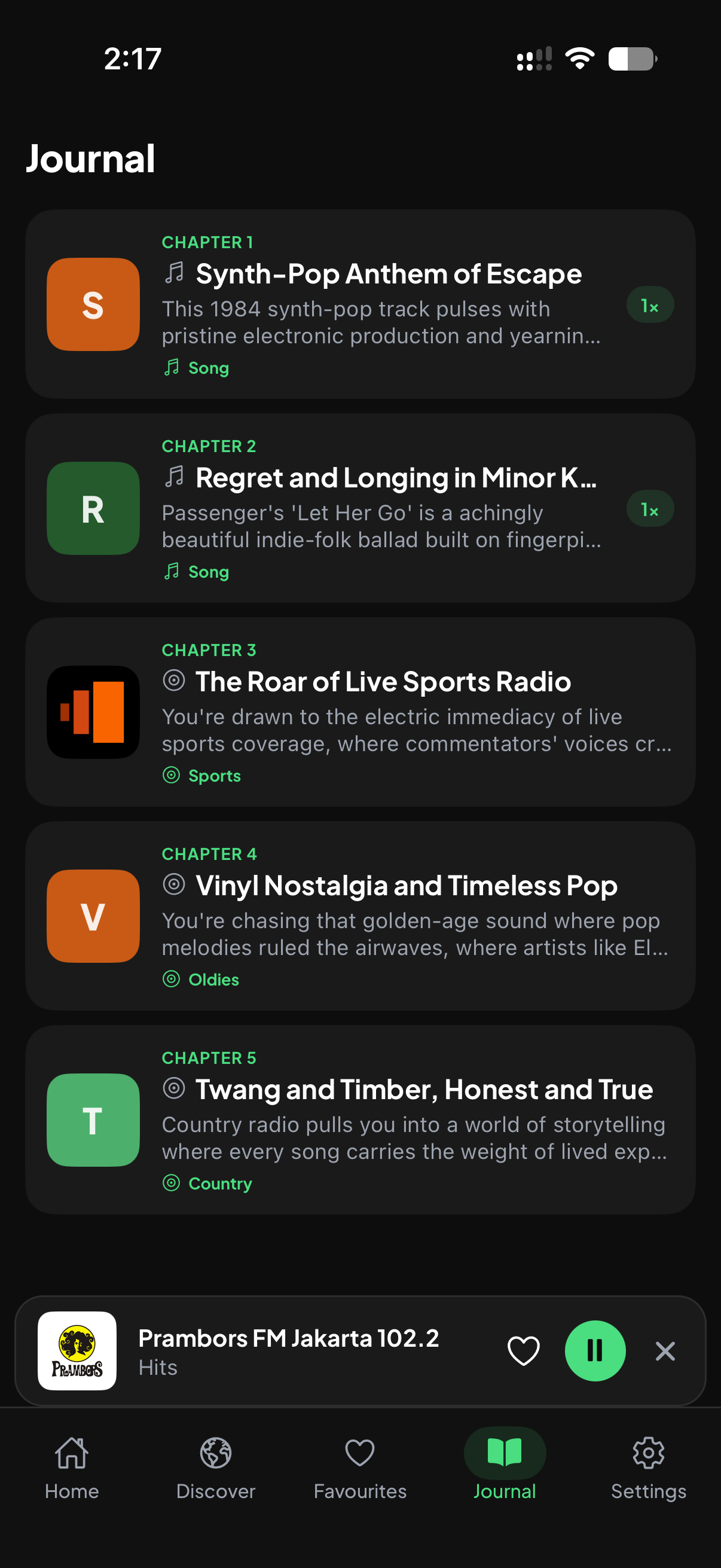
The result is a radio app that remembers you, explains itself in plain language, and feels more like a companion than a directory. It is a small example, but it shows the bigger point: AI does not need to reinvent radio. It just needs to make it a little smarter, a little more personal, and a lot easier to understand.
Want to try it? Download the Dive Radio Android APK.